Last updated on December 21st, 2025 at 07:22 am
I understand we’ve all had the strange guilt at unwrapping yet another plastic package. Well, what if I told you the wrapper could simply… vanish? Fall apart or be eaten, that is not, you know, decompose in a landfill. Sounds wild, right? This is where edibles come into play.
I stumbled across the concept while looking into sustainable packaging and, honestly, at first it all sounded quite sci-fi. But edible materials are not some far-off technology of the future. they are already being prototyped in labs and even beginning to appear in real-world scenarios.
Here’s what sets them apart from regular plastic, how they work on a practical level, and why they could truly revolutionize food packaging as we know it.
What Are Edible Materials, Actually?
Before we get to replacing plastic, let’s first unpack what it is we’re talking about.
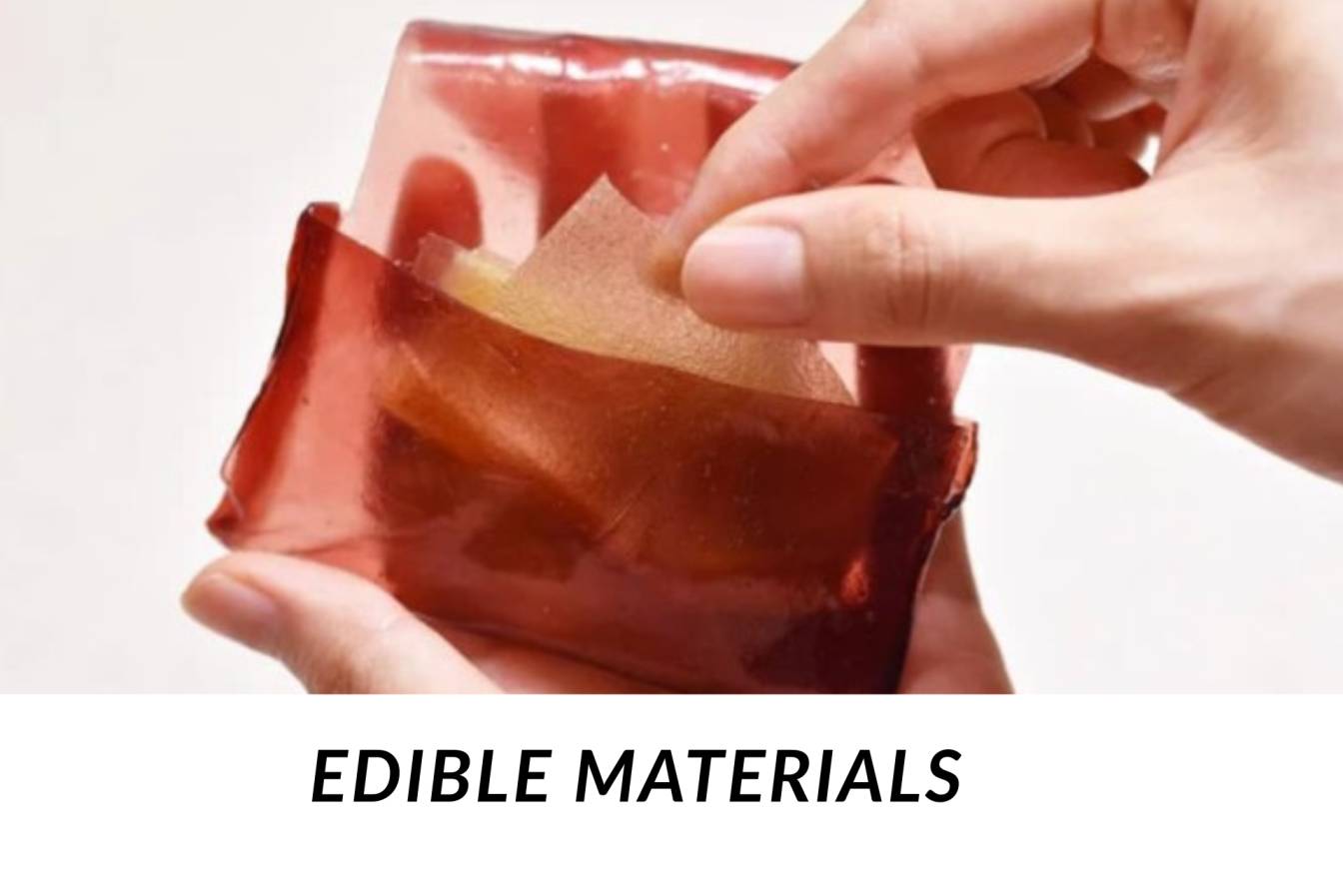
Edible ingredients are effectively things you can eat that are derived from stuff like starches, proteins, and plant oils. Rather than sitting in a landfill for 500 years (as plastic does), these products are intended to be either eaten with the food they contain, or to decompose naturally without leaving behind toxic remnants. You can think of them as the “single-use plastic” reverse: They are meant not to stick around.
The main types are easy enough to get: edible films (thin wrappers you could technically eat), edible coatings (sprayed or dipped onto produce) and smart films that actually sense food spoilage. There’s even edible electronics now, but we’ll save the weirdest for a sec.
How Edible Films Actually Work
Here’s where it gets practical. The most edible films begin with polysaccharides fancy-pants word for stuff like that starch in potatoes or tapioca. Scientists mix them with proteins (like gelatin, or soy) and plant-based oils, then process them into thin, flexible sheets. It’s kind of just like they make industrial plastic, to be honest, except all of the things that are being used here are food grade.
The key advantage? They form moisture and gas barriers just like plastic, which increases shelf life. I read about chitosan coatings, made from the shells of shellfish, being slipped even onto fruits and meats. Not only do they sit pretty they actively fend off mold and bacteria. Genius, right?
The catch is, such films are still not as durable as plastic. They also have poor water resistance and mechanical strength, so researchers are layering them or mixing in nanoparticles to strengthen them. It’s not ideal but it’s evolving the right way.
The Real Game Changer: Smart and Intelligent Films
Here is where edible ingredients become more than just a gimmick and begin to feel actually useful. Smart films add functional additives antimicrobials, antioxidants, pH indicators that actually do stuff. Picture a wrap that changes color, alerting you when your food is going bad. No guessing, no waste.
Other startups are embedding freshness markers directly in the coatings on food. The movie tracks the oxygen content or notes microbial growth and quite literally signals when food quality has fallen. You’d know right away if berries were past their prime without needing to open the container.
Why This Beats Plastic (Eventually)
The simple fact, however, is that edible substances have not yet arrived. Today’s models can’t quite replace plastic for all uses. But here’s why they’re worth the fuss:

Plastic sticks around forever. It crumbles into microplastics, contaminates oceans, strangles wildlife. At this point, we’re all pretty much eating tiny plastic particles. Edible materials? You don’t need to do anything with them; they either biodegrade themselves or you eat them. No toxic residue, no landfill shame.
They’re waste mitigators at their source. Instead of being something to remove from the packaging, you simply eat it or compost it along with your other food scraps. The math is clean.
Personalization becomes possible. Using 3D printing (imaging edible inks being squeezed out of a printer only with solids) companies are already producing custom nutrient-dense snacks, or medical diets. You can’t do that with inflexible plastic molds, so edible structures bend to our need here.
They’re extractable from waste streams. Fruit pulp from juice making, whey left over from cheese making agricultural byproducts such as these are the focus for researchers who hope to synthesize biopolymers. Converting garbage into packaging is the circular economy in action.
The Honest Limitations
It would be a disservice not to mention the difficulties. Cost is real. For now, it is expensive to scale up the extraction of high-purity biopolymers. Regulatory approval for new edible materials with active properties is no bomb popsicle governments want evidence that these things are actually safe to eat.
Consumer acceptance is another hurdle. People are weird about the eating of packaging. There’s also the texture and taste factor no one needs their berry coating to taste like cardboard.
What’s Actually Happening Now
This isn’t theoretical. “Pilot farms on high-value produce like leafy greens, and berries are already under study.” Essential oil–based nanoemulsion coatings are preventing fungus growth and extending shelf life of food. Ingestible sensors, encased in an edible film, are undergoing clinical trials for monitoring gut health.
It’s slow, but it’s moving.
The Takeaway
Edible substances are unlikely to entirely replace all the plastic tomorrow. Yet they are solving actual problems waste, toxicity, personalization in ways plastic simply can’t. They cost less now than they did five years ago and are more practical than they will be five years from now.
It’s not so much a question of “if” edibles will ever replace plastic but “when” and “for what.” The future of food packaging isn’t something, it’s hybrid systems where edible ingredients do what they are good at and we stop using plastic for things that don’t need to last forever.
Which is to say it is actually worth getting excited about.
Read:
Why Lab Grown Materials Are the Future Every Guy Should Know About

I’m software engineer and tech writer with a passion for digital marketing. Combining technical expertise with marketing insights, I write engaging content on topics like Technology, AI, and digital strategies. With hands-on experience in coding and marketing.