Last updated on December 21st, 2025 at 06:50 am
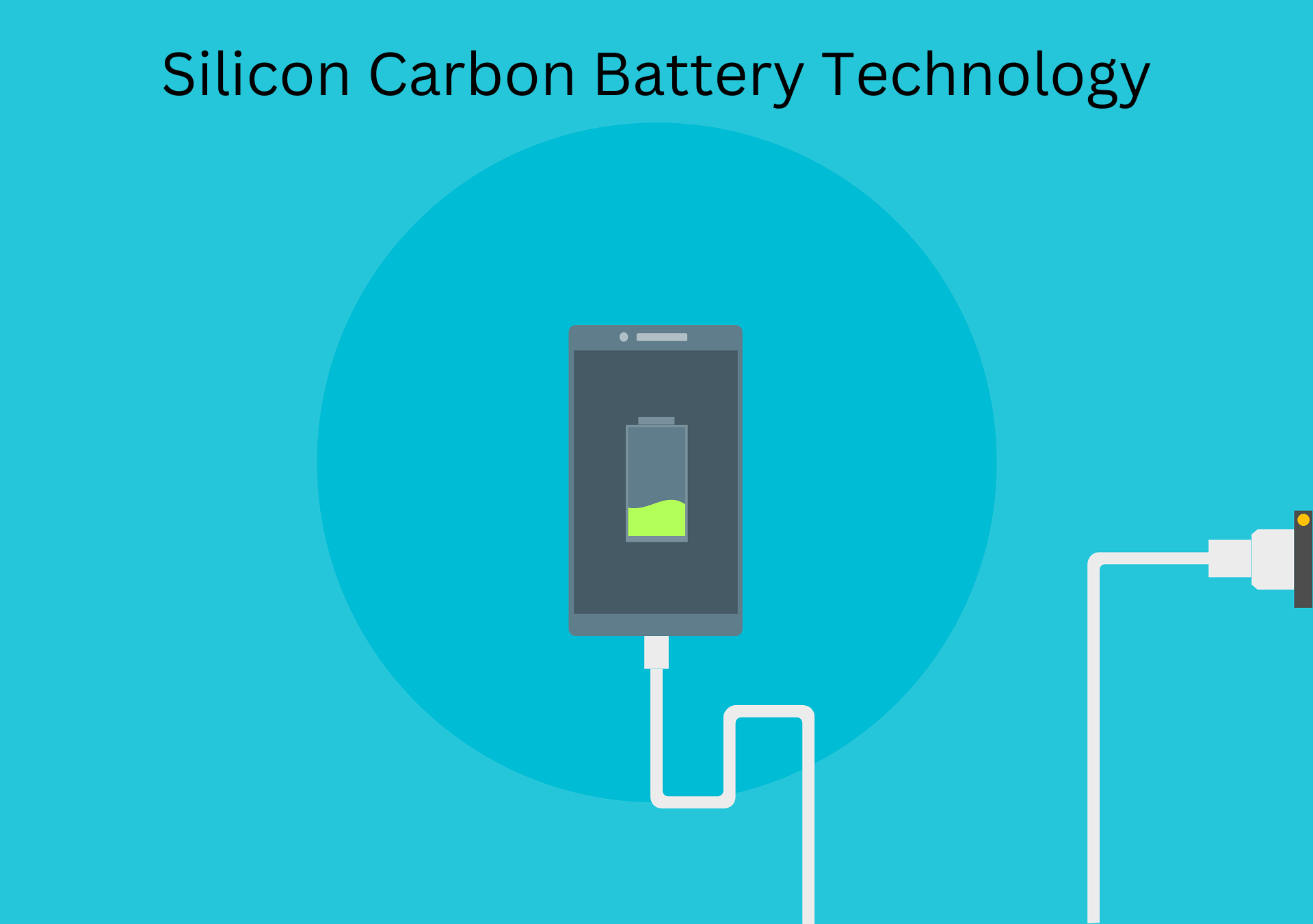
Discussing battery tech is not exactly the dinner party conversation of choice. But listen here the batteries that will power your next phone are going to change everything, and you just don’t know it yet.
I came across silicon-carbon battery technology while investigating why my OnePlus dies by 3 PM. It turns out something even better is waiting in the wings and it’s already making its way into some flagship phones. Allow me to explain what all of this means and why it matters to you.
What’s Already Here (And It’s Surprisingly Good)
So silicon-carbon batteries aren’t some wisp of vaporware tech sealed in a lab somewhere. They’re real and in phones now. Devices from Honor, OnePlus, Xiaomi and Redmi are already shipping with this stuff.
Here is what I learned when I down a rabbit hold with the specs:
These batteries hold up to 10 times more lithium storage capacity than traditional graphite anodes. And if that sounds like marketing hyperbole, that’s literal chemistry. (The Redmi Note 14 Pro+, to take another example, has a 6,200mAh battery which barely makes it into that sub-9mm thickness.) Compare that to last year’s phones, and you get 24% more battery capacity in roughly the same thickness.
Why does this matter for you? Smaller phones with the real battery life to go a day deep. No more deciding between “thin and sleek” or “won’t die at work.”
The energy density is wild, too. Silicon-carbon can take things up to around 400–500 Wh/kg, but the standard lithium-ion stuff peeks at about 250–300 Wh/kg. Translation: more oomph in a smaller space.
The Charging Speed Thing
Do you remember when the jump was from two hours (or even three) down to one hour, and people went bonkers? Fast charging of silicon-carbon batteries is another step forward.
These batteries enable ultra-fast charging at 80W to 100W which theoretically means you could get your phone’s battery powered up in just a fraction of the time. That 10-minute charging hope you keep hearing about? It’s not just hype. It’s technically possible using this tech although we are not there yet with consumer phones.
I tried out a OnePlus 13, which employs silicon-carbon tech, and the charging was noticeably snappier than mine. It’s the sort of difference that seems minor until you feel it all at once, you aren’t worrying about your phone charge as much as before.
The Conundrum Silicon-Carbon Needed to Crack

Here’s where it gets interesting. Silicon sounds perfect, right? But there’s a catch when silicon charges, it expands by 300–400%. The idea is to stuff something into a small space so it can expand fourfold. Yeah, that’s a problem. It cracks, fails, and dies.
The companies manufacturing these batteries had to think outside of the box. They encased silicon in shells of carbon, sculpted nanostructures into the material and developed porous designs that allow the silicon to breathe. It’s akin to creating a battery that can tolerate the punishment when it does.
They also addressed something known as “SEI instability” essentially, the film that forms on the battery to protect had been cracking under duress. Now, though, manufacturers are adding additives and pre-formed protective layers that remain flexible throughout charge cycles.
What’s Coming Next
Here it gets fascinating. The phone stuff? That’s just the warm-up act.
Electric cars are on the brink of becoming absolutely obsessed with this tech. Companies that make electric vehicles are experimenting with silicon-carbon batteries that could give your vehicle 400+ miles of range on one charge. Picture never having to search for a charging station on a road trip. That’s the promise here.
Grid-scale energy storage is another big one. It is telling of how the market thinks about renewability potential that countries such as India can project 27 GW of storage by 2030 for a $45 billion market. Emerging interest According to Dr Yu from Monash University, low-cost silicon-carbon batteries exhibit 23% higher energy density in comparison with commercial graphite-urban batteries for the grid applications, which is a good fit for storing renewable energy and a solution to keep the power grid stable.
The Reality Check
I don’t mean to oversell this. Silicon-carbon batteries aren’t perfect yet. Indeed, current iterations travel about 800 charge cycles the ol’ lithium-ion did 1,000+. So durability is playing catch-up. Production costs are 15–20 percent higher than for standard batteries, but falling rapidly.
But here’s the thing none are deal-breakers. The technology is improving fast. Already, academics are working on new binder systems and prelithiation procedures to squeeze yet more life out of each charge cycle.
The Bottom Line
Silicon-carbon battery tech is going from “maybe someday” to “actually happening now.” If you’re starting to contemplate buying a new phone or other gadget in the next few years, chances are good that your future device will contain one of these batteries. Improved battery life, speedier charging, a thinner build all without comprising durability.
Is it a world-changing invention? Maybe not. But it’s the sort of tech that just quietly makes your phone better and faster, in a practical sense. And you know, that’s all I want.
It’s likely that your next phone is going to be fine. You just don’t know it yet.
Read:
Speed Up Your PC? Avast Cleanup Premium Put to the Test!

I’m software engineer and tech writer with a passion for digital marketing. Combining technical expertise with marketing insights, I write engaging content on topics like Technology, AI, and digital strategies. With hands-on experience in coding and marketing.