Last updated on December 21st, 2025 at 07:12 am
Remember when the notion of an electric car seemed like a joke? Yeah, that didn’t age well. Now, we’re on the cusp of another revolution that’s going to change everything from your shoes to your smartphone case. Growing materials in the lab isn’t just an idea in a sci-fi novel. it’s here, it’s real and it’s already changing the game.
These are materials that have been grown in labs, engineered to be superior to anything nature (or, for traditional manufacturing enthusiasts, factories) ever served up. Think of custom leather without the cow, concrete that mends itself and packaging you can eat. This isn’t grandma’s manufacturing. it’s biology meets engineering and the effects are insane.
Lab-Grown Leather: Your Next Flex
Everything you know about leather can be thrown out the window. Companies such as Modern Meadow, which has cracked the code with Zoa. a meatless leather grown from yeast in a lab that’s already getting interest(s) from luxury dealers like Prada and Tiffany. This stuff isn’t trying to look like leather. it’s redefining what leather can be.
Simple genius, if you ask me. In the lab, scientists engineer yeast to make collagen and then tailor it to resemble various animal hides or invent completely new textures that nature never dreamed up. Want leather that’s waterproof, Done. For easier manufacturing, do you need it to come in liquid form? They’ve got you covered.
But here’s where it really gets interesting to the sustainability crowd (without getting preachy). bio-fabricated leather substitutes are using bacteria cellulose from leftovers from kombucha. Yeah, so that faddish beverage you only kind of ever liked is now going to be your next watchband. There are some very strong circular economy vibes coming off of this one.
The uses are already moving beyond fashion. We’re starting to see lab-grown leather show up in automotive upholstery, furniture and even high-end consumer electronics. This may be why your future Tesla interior is lab-grown, and honestly, it’s a little amazing.

Building with Biology: Building Better Buildings
Building materials haven’t changed all that much since, well, forever. Then along came synthetic biology and with it the phrase, “Hold my petri dish.” Bio- cement made from microorganisms (such as the type being developed by companies like Biomason) is supposedly three times stronger than conventional concrete.
Think about that for a moment concrete stronger than concrete made by bacteria. It’s as if you have teeny tiny construction workers laying down the foundation of your house from the inside out.
But it doesn’t stop there. Building materials grown from myc-lium are transforming mushroom roots into insulation you can use today that is naturally fire-retardant and totally biodegradable. There are companies like Biohm in London that are literally growing construction materials, as well as others that are converting industrial waste into building boards with the help of specialized enzymes.
The game-changer? “Bio-concrete” that fills in cracks by tapping the powers of biology (and engineered bacteria). Now imagine little cracks in your building’s foundation could heal themselves. No contractors, no downtime, just biology being biology at its best repairing.
Edible Materials: When the Vessel Is Part of the Meal
Now things get properly futuristic here. Edible packaging isn’t just about fixing the plastic problem, it’s rethinking what packaging itself can do. We’re talking fruit coatings that make food last longer, food wraps produced from agricultural waste and pharmaceutical capsules that form part of the treatment.
The tech runs further than you might think. These materials may be antimicrobial, antioxidant and even nutritive. Your food packaging might actually be part of your meal plan.
And from the oil extraction waste which sounds disgusting, no matter how you cut it companies are developing some of these ingredients into packaging materials made out of oilcake, upcycling industrial byproducts into something you can put in your mouth minus the food color. It is waste-to-product innovation at its best.
Bioprinting and Beyond: Laying Down the Lines of the Bio-Factory?
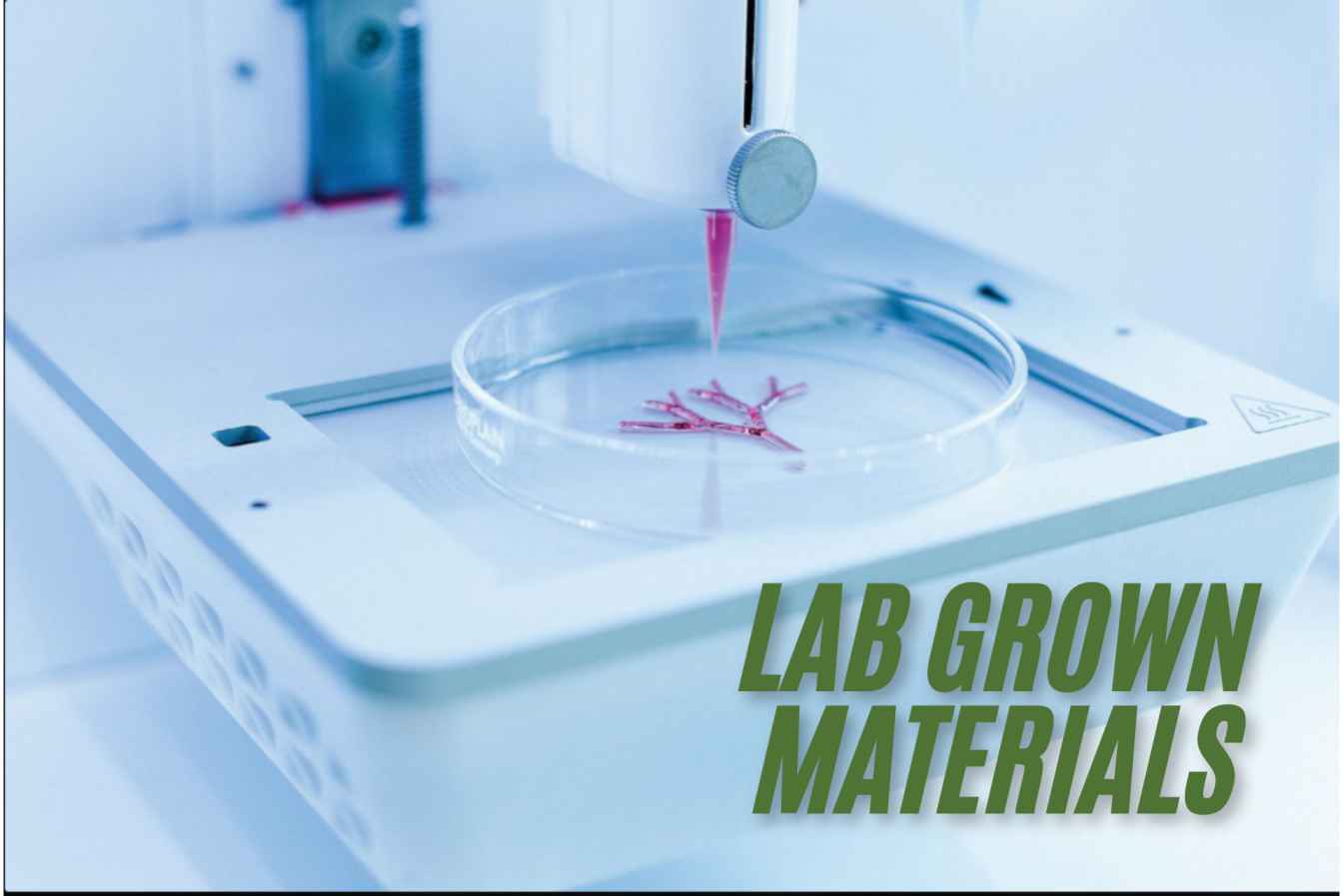
3D bioprinting combines lab-grown materials with medical technology in a way that is absolutely out of this world. What we’re doing now is not just printing plastic, but living tissues a layer at a time.
Current applications include tissue models for drug testing, patient-specific medical implants and scaffolds for tissue engineering. Research identifies three primary approaches: biomimicry (imitate nature’s way), autonomous self-assembly (let biology take its course) and mini-tissue building blocks (coming together from functional parts).
We’re a long ways off from the “print a new kidney” stage, but movement in that direction is escalating quickly. Organs-on-a-chip for testing, custom prosthetics and regenerative medicine scaffolds are already a reality.
The Reality Check: Problems and Prospects
Let’s face it there are some challenges with this tech. The energy intensity is still an issue (high power input values are necessary for some processes). Quality consistency is also a problem, as transferring from lab to the industrial is not necessarily a seamless process.
But you see tech enthusiasts, we understand that the initial hiccups are only speed bumps on the road to innovation. Consumer behavior is changing, laws are in flux, and the market opportunity is huge.
Why Tech-Forward Guys Should Care
Lab-grown materials are where biology, engineering and manufacturing meet in 2022 they make the scroll our round-up of cutting-edge innovation. It may not matter, if you are building the next startup or product development firm to whether you simply love to stay ahead of the trends in life understanding these materials provides you a glimpse into future almost every thing.
And the job opportunities alone are worth noting. The kinds of synthetic-biology positions are growing, and the convergence between AI and biology is establishing brand new specializations. There is massive entrepreneurial potential, particularly in niche applications where the benefits of lab-grown materials are clear.
The Bottom Line
Lab-grown materials are more than about making better stuff – they’re about fundamentally reimagining how we approach manufacturing. And from luxury leather substitutes to self-healing concrete, we’re looking at a materials revolution that makes the digital transformations look like child’s play.
The tech is there, the applications are growing, and the market awaits. Whether you are developing product, investing in innovation or simply curious about what is coming next, lab grown materials give you a preview of the future. And honestly? The future looks pretty solid.
Read: Biofabrication & Synthetic Biology: The Lab-Grown Revolution

I’m software engineer and tech writer with a passion for digital marketing. Combining technical expertise with marketing insights, I write engaging content on topics like Technology, AI, and digital strategies. With hands-on experience in coding and marketing.